Choosing the right finish for your aluminum products can be tough. Both anodizing and powder coating protect metal and make it look great. But they work in very different ways.
Anodizing vs. powder coating is a common question for anyone working with aluminum. Each process has its own benefits. The right choice depends on what you need for your project.
Anodizing creates a thin layer that becomes part of the metal itself. Powder coating adds a thicker protective layer on top. Both finishes last long and resist damage. But they differ in cost, appearance, and performance.
This guide will help you understand both processes. You’ll learn when to use anodizing and when powder coating works better. By the end, you’ll know which finish fits your needs.
What is Anodizing?
Let’s start by understanding how anodizing transforms aluminum at a molecular level through electrochemical processes.
Anodizing is a chemical process that changes the surface of aluminum. The metal sits in an acid bath with an electric current flowing through it. This creates a protective oxide layer.
The layer grows from inside the metal. It becomes part of the aluminum itself. This means it won’t peel or chip off easily.
There are two main types:
- Type II: Creates a medium-thick layer good for looks and basic protection
- Type III (Hardcoat): Makes a very thick, super-hard layer for tough conditions
The finish keeps aluminum’s natural metallic look. You can add colors through dyes. The layer is clear, so the metal shows through. According to Protolabs research, Type II anodizing adds only 5-25 micrometers of thickness. This keeps parts precise and accurate.
How the Anodizing Process Works
Now that you know what anodizing is, here’s exactly how the process creates that protective layer step by step.
- The process starts with cleaning the aluminum thoroughly. Any dirt or oil ruins the finish. Next, the metal goes into an acid bath.
- An electric current flows through the bath. The aluminum acts as the positive electrode. This causes oxygen to bond with the aluminum surface.
- The oxide layer builds up slowly. Thicker layers take more time. After reaching the right thickness, the part can be dyed.
Finally, the pores are sealed with hot water or chemicals. This locks in the color and protection. The entire process takes several hours.
What is Powder Coating?
Unlike anodizing’s chemical bath, powder coating uses electrostatic spray technology to create its protective barrier. Powder coating uses dry powder sprayed onto metal. The powder has an electric charge. This makes it stick to the grounded metal surface.
After spraying, the part goes into an oven. The heat melts the powder into a smooth, tough coating. The finish bonds tightly to the metal. Powder coating works on many metals, not just aluminum. You can use it on steel, stainless steel, and other materials. This makes it very versatile.
The coating is thicker than anodizing. It typically adds 50-150 micrometers to the surface. This extra thickness provides strong impact protection. Colors are nearly unlimited. You can match any RAL color. The finish can be matte, glossy, or textured.
The Powder Coating Application Process
Understanding how powder particles transform from dust to durable coating helps explain why this method works so well.
- First, the metal surface must be cleaned and prepared. This usually involves sandblasting or chemical treatment. Good preparation ensures the powder sticks properly.
- The powder is loaded into a spray gun. The gun charges the powder particles electrically. When sprayed, they’re attracted to the grounded metal.
- The coated part enters a curing oven at around 200°C (400°F). The powder melts and flows together. It forms a continuous, hard film.
- Cooling happens slowly to prevent cracking. The result is a smooth, even finish. The whole process takes less time than anodizing.
According to the Powder Coating Institute, powder coating produces almost zero volatile organic compounds (VOCs). This makes it environmentally friendly.
Key Differences: Anodizing vs. Powder Coating
Both finishes protect aluminum effectively, but their performance characteristics vary significantly based on several critical factors.
Durability and Hardness
Anodizing creates one of the hardest metal surfaces available. Type III anodizing can be harder than some steels. The surface resists scratches and wear extremely well.
Powder coating is softer but more flexible. It handles impacts better than anodizing. However, it scratches more easily under abrasive conditions.
For products like aluminium sliding windows that face daily wear, consider which type of damage is more likely.
Corrosion Protection
Both methods protect against rust and corrosion effectively. Anodizing becomes part of the metal structure. Even if scratched, it won’t expose bare metal underneath.
Powder coating forms a barrier layer on the surface. If chipped, the base metal may show through. This can lead to corrosion in damaged areas.
Research from ASTM B117 Salt Fog tests shows powder coating lasts 2,500+ hours in harsh conditions. Anodizing begins to fail around 500 hours in severe salt exposure.
Thickness and Precision
Anodizing adds very little material to the surface. This keeps tight tolerances intact without adjustment. It’s perfect for precision parts that need exact dimensions.
Powder coating is much thicker than anodizing. You may need to mask threads and tight-fitting areas. Extra clearance might be needed for moving parts.
For installations like aluminium bifold doors where precise alignment matters, anodizing maintains better dimensional accuracy.
Appearance Options
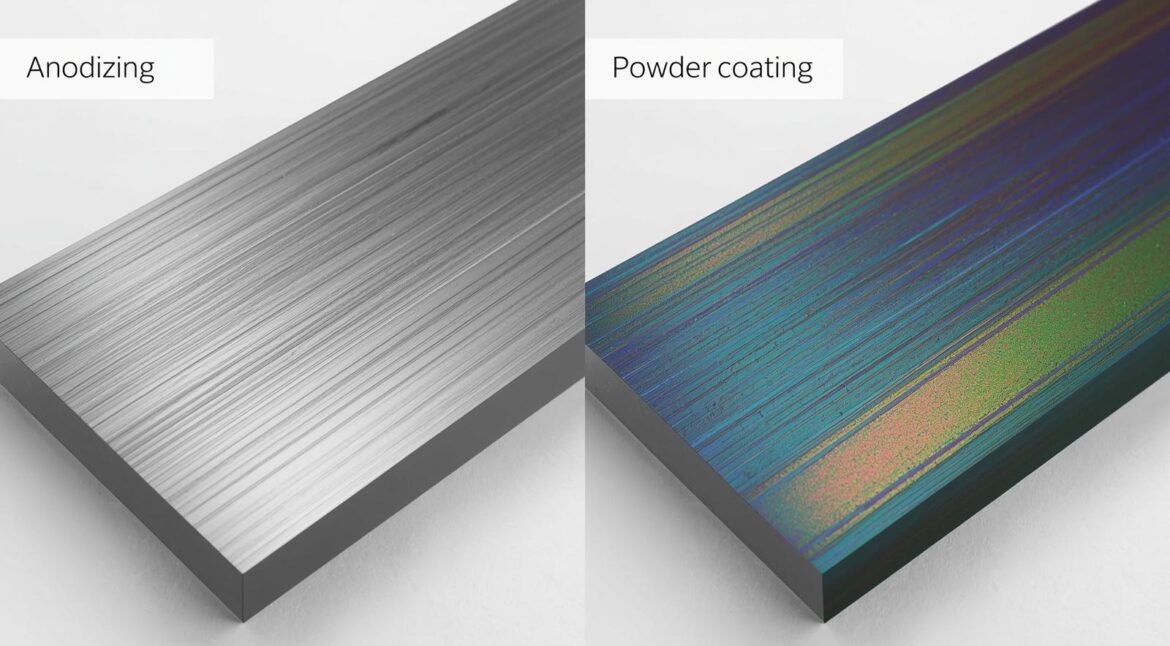
Anodizing gives a metallic, natural look that many prefer. Colors are limited but elegant and professional. The finish is semi-transparent and shows the metal grain.
Powder coating offers unlimited color choices. You can match brand colors exactly using RAL standards. Finishes range from matte to high gloss.
This versatility works well for aluminium pergolas, where custom colors create unique outdoor spaces that match your design vision.
Cost Comparison
Powder coating is usually more affordable initially. The process is simpler and faster for large batches. Equipment costs are lower than those of anodizing systems.
Anodizing costs more due to specialized equipment needed. However, its durability can save money long-term. Less maintenance means lower lifetime operational costs.
When to Choose Anodizing
Certain applications benefit significantly from anodizing’s unique properties, especially when precision and hardness take priority over color variety.
Pick anodizing when you need:
- Very hard, scratch-resistant surfaces for high-traffic areas
- Precise dimensional control for tight-fitting components
- Natural metallic appearance that showcases aluminum’s beauty
- Parts that handle high temperatures regularly
- Long-lasting outdoor performance without color fading
- Electrical insulation properties for electronic housings
Anodizing works exceptionally well for curtain wall systems. These large installations need consistent weather resistance. The finish also maintains its appearance for decades. It’s also ideal for high-end architectural projects. The premium metallic finish adds significant value. The durability justifies the higher initial investment.
The American Architectural Manufacturers Association (AAMA) sets industry standards for anodized architectural aluminum that ensure quality and longevity.
When to Choose Powder Coating
Powder coating excels in situations demanding maximum color flexibility, impact resistance, and multi-material compatibility at competitive pricing.
Choose powder coating when you need:
- Bold, custom colors that match brand guidelines (RAL colors available)
- Impact-resistant finish that handles bumps and knocks
- Coverage on multiple metal types beyond aluminum
- Lower cost for large projects or batches
- Easy repair and touch-up options when needed
- Strong UV and weather resistance for outdoor use
Powder coating is perfect for outdoor structures that need durability. The thick coating withstands harsh weather conditions excellently. It also keeps its color for years.
It’s also great for automatic doors where bold colors create strong visual statements. The finish can match any interior design scheme.
For aluminium rolling shutters that need tough protection, powder coating provides excellent impact and scratch resistance.
Making Your Decision
Consider these factors carefully before choosing between anodizing and powder coating for your specific aluminum project needs.
Environment: Coastal areas need extra protection from salt. Powder coating performs better in salty ocean conditions. Anodizing works best in controlled indoor environments.
Budget: Powder coating costs less upfront for most projects. Anodizing may cost less over 20+ years. Calculate lifetime value, not just initial expense.
Appearance: Need metallic looks that shine? Choose anodizing for that premium feel. Want bright colors that pop? Go with powder coating’s unlimited options.
Precision: Tight-fitting parts need anodizing’s thin-layer application. Powder coating’s thickness may interfere with precise assemblies. Consider dimensional requirements carefully.
Material: Working only with aluminum exclusively? Both work effectively. Using mixed metals in your project? Powder coating is more versatile across materials.
For residential projects like aluminium sliding doors, consider how the finish complements your overall design. The right choice enhances both function and beauty.
Conclusion
Both anodizing and powder coating protect aluminum effectively. Anodizing offers superior hardness and precision control. Powder coating provides more color options and versatility.
For architectural projects requiring exact dimensions, anodizing wins clearly. For bold, colorful outdoor installations, powder coating is better. Each has its place in modern construction.
Consider your specific needs, budget, and environment carefully. Both finishes deliver excellent long-term performance when applied correctly. The right choice depends on your priorities.
Need expert guidance on aluminum finishing options? Consult with experienced manufacturers who understand both processes. They can recommend the best solution for your requirements.