
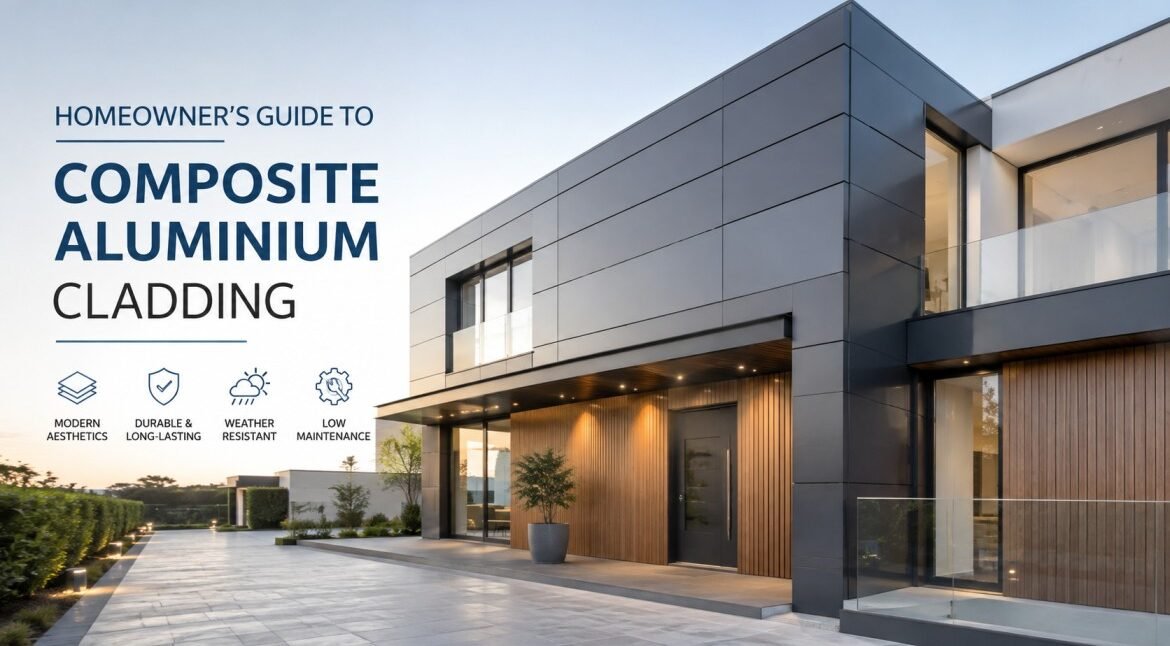
Composite aluminium cladding is one of the most popular exterior wall materials used in homes today. It protects walls from heat, rain, dust, and wind. The material is made of two aluminium sheets bonded to a solid core.
This layered build makes it light, strong, and long-lasting. Homes that use aluminium composite panels stay cooler, look cleaner, and need far less upkeep than homes with painted render or timber cladding. But not all panels are built the same. So which one is actually right for your home?
What Is Composite Aluminium Cladding?
Composite aluminium cladding is simple, but very ingenious. The panel is covered with two thin aluminium skins on its outer surfaces. The area between is filled with a core material. This type of structure is known as a sandwich panel. It is stiff, flat and much more stable than a single sheet of metal.
The core changes everything about how the panel performs. A polyethylene (PE) core is inexpensive, but flammable. The core is made of a fire-resistant material, such as a fire retardant (FR) or a mineral, which meets safety standards. The selection of core type will be determined by the type of building, local regulations, and the life of the cladding materials.
The use of well-designed openings together with strong panels produces an efficient, tight building shell. Aluminum sliding doors are commonly combined with aluminum clad glass (ACM) to achieve a high level of solar gain with thermal insulation.
Key Benefits of Aluminium Composite Panels for Homes
Most building materials are good at one thing, and bad at the other. ACP cladding is different. It handles several problems at once, which is why so many homeowners keep coming back to it.
The sections below break down what it actually does for your home day to day.
Thermal Performance and Lower Energy Bills
Summer heat cannot be left outside. It penetrates through your walls and forces your cooling system to run more than expected. But composite aluminum panels slow that process down quite a bit.
A ventilated back space between the panels is best. Hot air will become trapped in that space, rise, and finally exit at the top. Your wall stays cooler. Your air conditioning runs less. Your bills shrink.
Weather Resistance and Long-Term Durability
Aluminium composite material simply does not behave the way timber or painted surfaces do. It will not rust. It will not swell after rain. A sandstorm rolls through, and the surface stays intact.
A good PVDF-coated panel is smooth enough that dust barely grips it. Most days, water alone washes the whole facade clean.
Sound Insulation for a Quieter Home
Those layers inside the panel do something most people do not expect. They eat sound. Traffic outside becomes background noise. Construction sounds fade. Wind stops rattling through the walls.
If you live near a busy road or a growing neighbourhood, this one benefit alone changes how comfortable your home feels.
Low Maintenance, High Returns
Timber needs painting every couple of years. Render needs patching. Aluminium cladding panels need neither. A soap and water wash now and then is genuinely all the care they require.
That is time and money back in your pocket, year after year.
Choosing the Right Core Material
The core is the single most important part of any composite wall panel. It controls fire safety, structural strength, and how long the panel lasts. There are two types every homeowner needs to know about before making a purchase decision.
A PE core is lighter and cheaper upfront. But it catches fire easily and fails to meet most building safety codes for homes. An FR or mineral-filled core is non-combustible or slow to burn. It meets UAE Civil Defence rules and international standards. Always check the core type before you commit to a product.
For maximum safety and performance, FR core panels are the right call. They cost a little more but offer far greater peace of mind in the long run.
Fire Safety Standards and Compliance
Aluminium cladding must be fire tested before it can be used on homes. The tests differ from country to country, but they are all about the same: measuring the speed of spreading fire. The key standards are the European Standard EN 13501-1; the ASTM E84 and NFPA 285 in the United States; and BS 8414 in the United Kingdom. Any facade system on a residential building in the UAE must be approved by Civil Defence.
Always ask your supplier for documented test certificates. Fire performance is rated at system level, not just panel level. The fixings, insulation, and subframe all affect the overall fire rating of your facade.
Finish and Design Options for Your Home Exterior
Aluminium composite cladding gives homeowners a wide range of looks to choose from. The right finish adds character and ties the exterior together. These design choices go far beyond just picking a colour.
Colour and Texture Choices
Solid colours produce clean, sharp lines on any home. Metallic finishes add a premium, architectural feel. Wood-effect composite panels look like real timber but never warp, fade, or rot in the sun. Stone and marble textures bring a luxury look without the weight or high cost. All of these finishes suit feature walls, entrances, balcony edges, and full facades.
Large facades with bold finishes look even better when framed by strong glazing. A curtain wall system can complement the cladded sections while flooding interior spaces with natural light.
PVDF Coating for Long-Term Colour Stability
PVDF (Polyvinylidene Fluoride) is the coating of choice for any exterior panel exposed to direct sun. It resists UV fading, chalking, scratching, and chemicals. A quality PVDF finish holds its colour for 20 to 30 years in harsh conditions. Cheaper coatings break down in a few years in hot climates. PVDF is not an upgrade here. It is the minimum you should accept for any exterior application.
Installation Best Practices for Composite Cladding
Getting the panels right matters, but getting the installation right matters just as much. Even the best aluminium cladding panels will fail early if the subframe or sealing is done poorly. These are the steps that make the biggest difference on site.
Site Preparation and Subframe
Check the wall carefully before anything goes up. Look for cracks, damp patches, or loose sections. Fix all issues before the subframe goes in. Use a corrosion-resistant aluminium or galvanised steel frame to support the panels. This frame must handle the panel weight and allow for thermal movement over time.
Homes with large window openings benefit from matching the subframe layout to the glazing. Bi-folding doors work well here because they create wide, uninterrupted openings that sit cleanly within a cladded facade.
Ventilated Cavity and Sealing
Leave an air gap between the back of the panel and the wall surface. This ventilated cavity removes trapped heat and stops moisture from building up. Seal all panel joints with silicone rated for outdoor use. Allow small expansion gaps at each panel edge. Without these gaps, panels buckle when temperatures rise.
Maintenance and Long-Term Care
The brutal reality of the maintenance of aluminium composite panels is that it is not difficult. The average homeowner makes it complicated.
Rinse the surface every few weeks under low-pressure water. That removes the dust before it gets stuck. If the mark is not water-soluble, use a soft cloth with a little mild soap and gently wipe. Rinse after.
Rough pads and strong cleaning chemicals are the enemy here. They scratch and degrade the PVDF coating, and that shortens the whole panel’s lifespan fast.
Every year, inspect all the joints around your home while walking around the perimeter. Look for cracks, gaps, or sealant that has become hard and separated from the edge. Taking care of the small things early on saves significant repair costs later.
Handle them properly, and they will provide you with 25-30 years of reliable service.
Frequently Asked Questions
What is the lifespan of composite aluminium cladding?
Most panels can last for 25 to 30 years when they are properly coated and installed with quality PVDF coating. Consistent basic maintenance pushes that number higher.
Is it easy to clean in dusty or humid climates?
Very easy. The sealed surface stops dust from bonding to it. Water handles most cleaning. Mild soap takes care of the rest. No specialist products needed.
Do I need planning permission to clad my home?
That depends entirely on where you live and what your local authority requires. Always check before ordering materials or booking an installer.
Can PE core panels ever be used on a home exterior?
PE core panels may be permitted in some locations. Still, FR or mineral-core panels are generally recommended for residential exteriors because they offer better fire performance and comply with many building codes.
How does cladding work alongside aluminium doors and windows?
They are most effective when used in combination. Combining cladding with pivot doors or casement windows creates a complete, finished look, reduces noise, and enhances the building envelope.