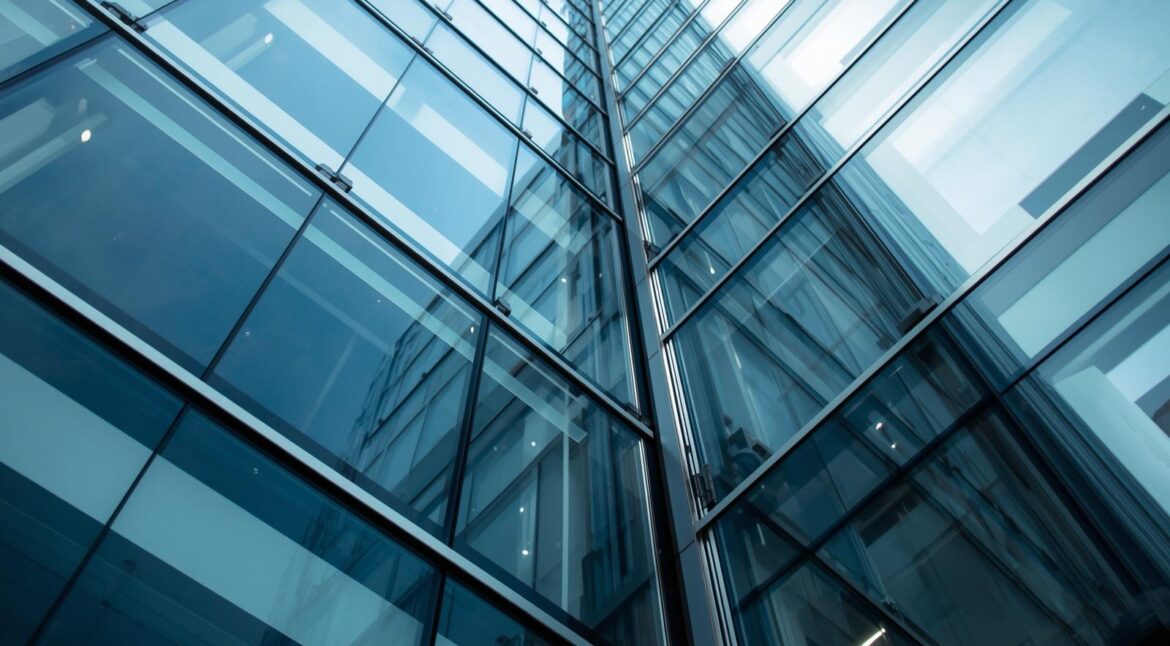
A curtain wall system is a lightweight, non-load-bearing façade that hangs from the structural frame of a building. It’s typically made of aluminium frames and large glass panels, and its main purpose is to protect the interior from external elements while delivering a clean, modern appearance.
Thanks to their flexible design, curtain walls have become popular in high-rise construction. This article provides an overview of the main design features of curtain walls.
Key Components of a Curtain Wall System
Understanding the key components of a curtain wall system helps you appreciate how these complex assemblies work together to deliver performance, beauty, and safety.
1. Mullions (Vertical Framing Members)
The main vertical framing components that run between floors are called mullions. They are the structural backbone of the curtain wall and transfer of lateral wind loads and dead loads to the building structure. Millions on most systems have been extruded out of aluminum because of its weight-to-strength ratio and its non-corrosiveness.
2. Transoms (Horizontal Framing Members)
Transoms are horizontal members that connect the vertical mullions. They divide the facade into individual sections and provide support for the infill panels, whether glass, metal, or stone. Transoms also play a key role in the drainage of water away from the facade.
3. Glazing (Infill Panels)
Glazing refers to the glass or other transparent/translucent infill material installed within the curtain wall frame. Modern curtain wall glazing often uses double-glazed or triple-glazed insulated glass units (IGUs) to achieve thermal and acoustic performance. Low-emissivity (Low-E) coatings on glass help control solar heat gain and improve energy efficiency.
4. Spandrel Panels
Spandrel panels are the opaque sections of the curtain wall facade. They are positioned at floor levels to conceal structural elements, HVAC systems, floor slabs, and other mechanical equipment that should not be visible from outside the building. Spandrel panels are usually made from glass with an opaque ceramic coating, or from metal panels.
5. Anchoring System
The anchoring system consists of specialized steel or aluminum brackets and connections that fix the curtain wall to the building’s primary structural frame. These anchors must accommodate thermal movement, structural deflection, and seismic activity while securely transferring loads. Proper anchor design is critical to the overall safety and performance of the system.
6. Gaskets and Sealants
Gaskets are rubber or EPDM strips that seal the gap between glazing panels and the frame, preventing air and water infiltration. Sealants, typically silicone-based, are applied at joints to provide weatherproofing.
Types of Curtain Wall Systems
There are several types of curtain wall systems, each suited for different project requirements, budgets, and installation conditions. Understanding the differences helps architects and engineers make the right choice for any given project.
1. Stick Curtain Wall System
- Traditional method of curtain wall construction, where components are assembled on-site.
- Lower initial material costs but requires skilled labor for on-site assembly.
- Best suited for low-rise buildings where transportation of prefabricated panels is not feasible.
2. Unitized Curtain Wall System
- Factory-fabricated panels ensure higher quality control and faster installation.
- Ideal for high-rise structures where speed and efficiency are critical.
- Reduced labor costs as most of the assembly work is done off-site.
3. Point-Fixed and Structural Glazing Systems
- Eliminates visible framing, creating a seamless all-glass appearance.
- Enhances building transparency and architectural elegance.
- Commonly used in luxury commercial spaces, airports, and landmark buildings.
Common Applications of Curtain Wall Systems
The most common Curtain Wall Systems applications include:
- Commercial Office Buildings: The commonest use of curtain wall systems is in high-rise and mid-rise office towers. They offer a professional, contemporary look and make optimum use of natural daylight in open-plan offices.
- Hotels and Hospitality Buildings: Curtain walls are intended to help hotels establish spectacular visual fronts and give away panoramic scenery to their guests, which improves the overall experience of the guests.
- Airports and Transit Terminals: The glass curtain walls are very big, which means that terminal spaces are flooded with natural light, which minimizes the use of artificial light; the spaces become open and welcoming to travelers.
- Shopping Malls and Retail Centers: Curtain walls create visually attractive retail frontages and help draw shoppers inside with their transparent, inviting appearance.
- Hospitals and Healthcare Facilities: Curtain walls provide natural light, a critical element for patient wellbeing, while meeting stringent hygiene, thermal, and acoustic requirements.
Key Benefits of Curtain Wall Systems
What are the reasons why architects and developers still prefer curtain wall systems instead of ordinary masonry or brick veneer? The solution is in the fact that they have various benefits:
- Maximum Natural Light: Large glass infill panels ensure that much of the daylight is brought into the building interior to minimize reliance on artificial lighting and enable a healthier and more productive interior space.
- Reduced Structural Load: Curtain walls are non-load-bearing, and so they place minimal stress on the building frame, making them easy to design with more structure, and may save money on foundation and framing expenses.
- Design Flexibility: Curtain walls allow an almost unlimited series of aesthetic options between the totally transparent glass towers and mixes of metal, stone, and glass.
- Speed of Construction: Curtain walls can also be erected quickly when unitized, especially when the structural frame has been built; this assists in accelerating the entire construction programme.
- Energy Performance: Curtain wall systems with thermal breaks and Low-E glazing used today can be designed with very high U-values, which helps in the overall energy efficiency and sustainability of the building.
• Durability and Low Maintenance: The curtain walls made of aluminum frame are naturally resistant to corrosion, need minimal maintenance, and last several decades when installed correctly and maintained.
Why Your Project Needs a Curtain Wall System
- Enhances building aesthetics and architectural appeal.
- Improves energy efficiency and reduces operational costs.
- Ensures long-term durability and weather resistance.
Frequently Asked Questions
What are the disadvantages of curtain walls?
- Cost: Curtain walls may cost more to build and maintain than other building envelopes, including masonry or concrete building walls.
- Weight: The use of curtain walls can be comparatively heavy and thus may need extra support structure to build and make them more costly.
Is a curtain wall system load-bearing?
No. The curtain wall system is non-load-bearing. It is not able to support the structural loads of the floors or roof above it. It has a self-weight only, and lateral winds are transferred to the primary structural frame of the building through its anchor connection.
What is the difference between stick and unitized curtain wall systems?
Stick-built curtain walls are constructed on-site, and unitized systems are prefabricated and installed as panel construction.
Conclusion:
The curtain wall systems are not mere glass facades, but an intelligent architectural solution to the aesthetic appeal, energy-saving, and long life. In case you are carrying out a project in the UAE and need great design and tested durability, then aluminium curtain wall systems of FAM Aluminium will certainly be the correct choice.