

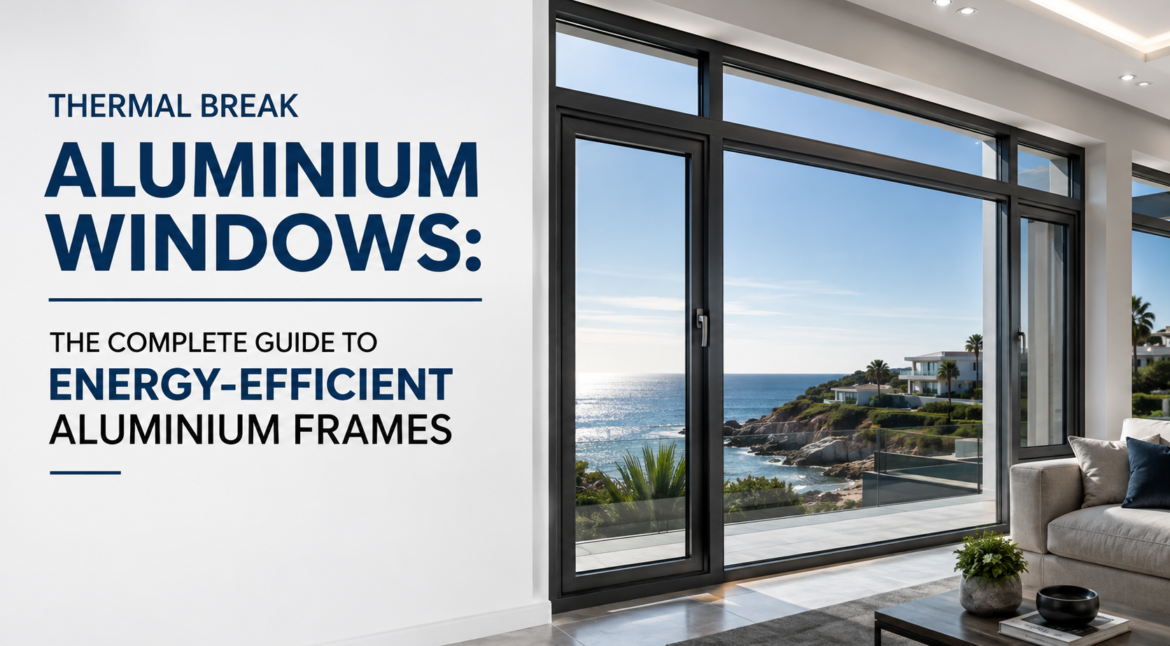
Thermal break aluminium windows are frames built with an insulating barrier inside the aluminium profile. This barrier stops heat from moving through the metal. It keeps homes cooler in summer and warmer in winter.
Plain aluminium is a fast heat conductor. Without a break, hot air enters in summer and warm air escapes in winter. This raises energy bills and makes rooms uncomfortable.
A thermally broken aluminium frame solves this problem by adding an insulating barrier between the inner and outer sections of the frame. This is a significant difference in terms of comfort and energy efficiency.
To upgrade your windows, request a free quote from Fam Aluminium and find the right thermal break system for your project.
What Are Thermal Break Aluminium Windows?
Thermal break aluminium windows have a strip of non-metal material placed between two aluminium frames. This strip blocks direct heat flow through the frame.
Typically, the insulating strip is formed of polyamide, a strong and low-conductivity material. It is located between the outer and inner profiles.
How the Thermal Break Works Inside the Frame
Before we look at benefits, it helps to see how the frame is actually built and joined together.
The frame has three main parts. The exterior aluminium profile faces outdoor weather. The interior aluminium profile faces the room. Between them sits the insulating barrier.
This barrier interrupts the metal-to-metal path. Heat cannot pass straight through anymore. The result is a frame that holds indoor temperature far better than standard aluminium.
Thermal Break vs Standard Aluminium Windows
Standard aluminium windows use one continuous metal profile. Heat moves through easily, inside and out. Thermal break aluminium windows separate that profile with insulation.
| Feature | Standard Aluminium | Thermal Break Aluminium |
| Heat transfer | High | Low |
| Energy efficiency | Low | High |
| Condensation risk | Higher | Lower |
| Upfront cost | Lower | Higher |
| Long-term value | Lower | Higher |
For hot climates like Dubai, this difference matters a lot. Standard frames let heat inside fast. Energy-efficient aluminium frames keep interiors stable.
Key Benefits of Thermal Break Aluminium Windows
These windows offer more than insulation alone. They provide measurable advantages for both residential and commercial properties.
- Lower energy consumption, since less heat passes through the frame
- Consistent indoor temperature, with no cold or hot spots near windows
- Reduced condensation, as the interior frame surface stays warmer
- Long-term durability, with strong resistance to rust and warping
- Slim, modern profiles that support larger glass panels
- Better acoustical performance, including double glazing.
Commercial buildings such as restaurants and offices that are subject to frequent use throughout the day should have strong frames. This level of frequent use is what our sliding windows were created to handle, yet keeping the seal tight.
Are Thermal Break Aluminium Windows Worth the Investment?
Yes, thermal break aluminium windows are worth it for most projects. They cost more upfront than standard frames. But they save money over time.
Lower energy bills add up every month. Fewer condensation problems mean less repair work later. A well-built frame also holds its value and appearance for decades.
For UAE homeowners and builders, this investment supports both comfort and long-term property value.
Best Applications for Thermal Break Aluminium Windows
Thermal break aluminium windows suit a wide range of building types, though certain applications benefit the most.
Residential properties gain from their clean, modern appearance and support for large glass areas. For ventilation flexibility without compromising the seal, our tilt and turn windows offer two opening options in a single unit.
Commercial buildings require consistent performance across multiple floors and units. Our curtain wall system provides thermal performance at scale for large-scale glass facades.
This is also beneficial in coastal and humid areas where condensation levels are reduced, reducing long-term damage risks. In restaurants, where lots of people are moving around all the time, frames are built to last.
What to Check Before You Buy
Thermal break systems vary in quality. A few key details help distinguish a well-built frame from a lower-performing one.
Review the profile depth, since deeper frames typically support larger glass and better insulation. Confirm the glass type, as double glazing or Low-E glass significantly improves performance. Ask about seal quality and hardware, since weak seals allow air infiltration even in a properly built frame.
To complete a full, energy-efficient façade, pair your windows with our bi-folding doors or sliding doors.
FAQs
Do thermal break aluminium windows make sense?
Yes, they are worth it! They save you energy expense, they help to condense and keep your rooms warm or cool throughout the year, whatever the weather is outside.
Does each aluminium window have a thermal break?
No, they don’t. When purchasing a window, always make sure they are thermally broken, meaning they are made by a strip of insulation between two aluminium elements.
Can these windows fully eliminate condensation?
Not entirely, but they do cut down on it. Warm inner frames will prevent a large amount of moisture buildup, but moisture buildup will depend on the humidity in the home and the installation technique.
Do these windows perform well in hot climates like Dubai?
Yes, they work well in hot areas such as Dubai. They keep the heat from the outside out of your home and reduce the load on your air conditioner.